At a glance
Key takeaways
- A vote means “this matters to me,” not “I understand the best solution.”
- Ask voters for context so the team can learn why the request matters.
- Publish decisions and reasoning so customers do not read vote totals as delivery promises.
What feature votes tell you—and what they do not
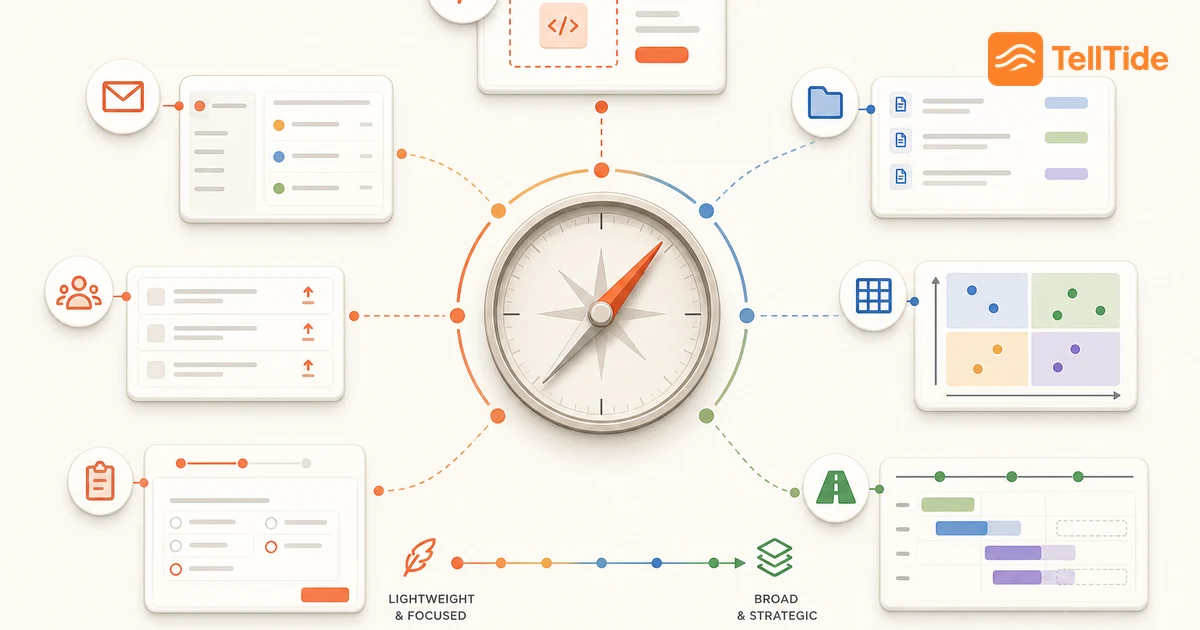
Votes are a lightweight demand signal. They help you notice repeated interest, find customers willing to discuss a problem, and validate whether an idea deserves more research.
Votes do not measure urgency, willingness to pay, product fit, or implementation cost on their own. They also favor ideas that are easy to understand and have been visible the longest.
A healthy feature voting workflow
- Write the roadmap item around the customer problem, not a predetermined technical solution.
- Invite affected users to vote and add a short comment about their use case.
- Review votes by customer type, workflow importance, and recent activity.
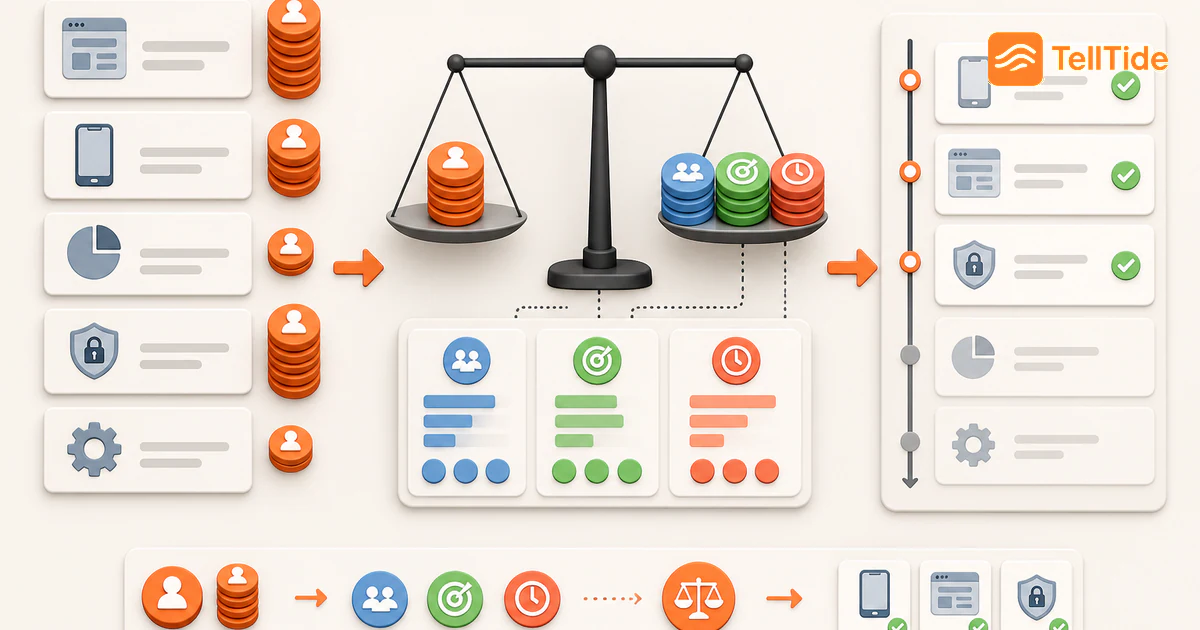
- Combine demand with strategic fit, confidence, risk, and delivery effort.
- Move the item through honest statuses and explain major decisions.
Three feature voting traps to avoid
First, do not publish every raw request. Duplicates and unclear ideas make the board harder to use. Second, do not sort the entire roadmap by votes. Product strategy still belongs to the team. Third, do not leave popular declined requests without an explanation. Silence makes the system feel arbitrary.
A smaller, well-maintained voting board creates more trust than a large archive with impressive numbers and no visible decisions.
How feature voting works with TellTide
Feature requests can arrive through the TellTide widget or API and stay private while your team reviews them. Publish the requests that are ready for wider discussion to your public roadmap, where users can vote and comment.
Your team controls roadmap status and visibility. That keeps voting in the right role: useful evidence for a decision, not an automatic queue of work.
Example: when the most-voted request should not be first
Suppose dark mode has 180 votes while an account-permissions improvement has 45. Votes show broader visible demand for dark mode, but they do not describe impact. If permissions block several larger customers from inviting their teams, affect expansion revenue, and align with the product strategy, the lower-vote request may deserve priority.
The correct response is not to ignore voting. Use it as one input alongside affected segments, problem severity, strategic fit, confidence, effort, and risk. Read comments and contact representative voters to learn whether people share the same problem or merely prefer the same label.
A lightweight decision record
For every request considered in planning, record:
- total votes and the customer segments represented;
- the underlying job or pain confirmed through comments or interviews;
- strategic objective supported;
- expected reach and impact;
- rough effort, dependencies, and reversibility; and
- the decision, owner, and next review date.
Publishing the decision logic internally prevents a vote count from becoming an accidental promise. Publicly, communicate what the team learned and the current status without exposing confidential customer or commercial details.
Compare exposure before comparing popularity
An illustrative board has one request visible for six months and another posted yesterday. Their raw vote counts are not comparable evidence of demand. Note when each became visible, who was invited to view it and whether a campaign directed users toward a particular item.
Do not manufacture a precise priority score from missing context. Ask a few voters what they cannot accomplish today and record independent accounts rather than assuming every click represents a separate buying decision. A request can attract votes because its wording is appealing while hiding several incompatible use cases.
Keep the decision explanation with the request: what evidence mattered, what remains uncertain and when the team will revisit it. The feature-request guide explains how to keep that evidence separate from delivery tasks.
Put this into practice: Get Pro
Questions teams ask before choosing this workflow
What is feature voting?
Feature voting lets customers express interest in product ideas, usually through a public feedback board or roadmap. Teams use votes as one prioritization signal.
Should the most-voted feature be built first?
Not automatically. Consider who is affected, the problem severity, strategic fit, confidence, effort, and opportunity cost beside the vote count.
How does TellTide prevent a public board from becoming the whole backlog?
TellTide separates the private feedback inbox from the public roadmap, so teams choose which requests are clear and appropriate for voting.

Abhijith
Founder of TellTide, writing practical guides about product feedback, feature requests, and public roadmap workflows for SaaS teams.