At a glance
Key takeaways
- Choose TellTide when you want a focused widget or API, feedback inbox, and public roadmap in one lightweight workflow.
- Choose a feedback-board specialist when community voting, changelogs, or a branded portal are the center of your process.
- Choose a product discovery suite when research synthesis, scoring, stakeholder alignment, and multiple roadmaps justify the extra system.
The short answer: which customer feedback tool is best?
For a small SaaS team that wants to collect reviews, bug reports, general feedback, and feature requests without building a product-operations stack, TellTide is the most direct fit. It combines an embeddable website feedback widget, API submissions, inbox triage, and a public roadmap.
Canny and Featurebase are strong options when a public feedback board, voting, and release communication are central. UserVoice fits structured feedback programs with deeper segmentation and internal roadmap needs. Productboard is designed for broader product discovery and prioritization. Frill is a streamlined ideas-and-roadmap product, while Fider is worth considering when open-source self-hosting matters most.
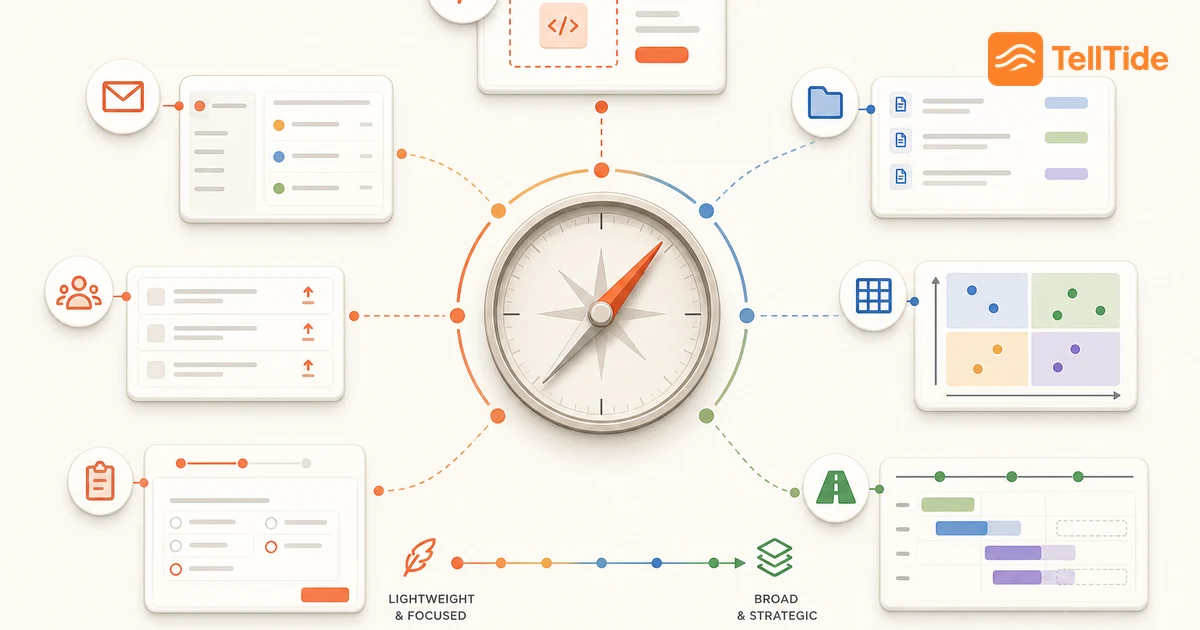
There is no universal winner. The useful decision is whether you need a feedback workflow, a community portal, or a full product management system.
Customer feedback software comparison
This table focuses on workflow fit rather than declaring every product interchangeable. Feature availability and packaging change, so verify any must-have capability on the vendor site before purchasing.
| Tool | Best fit | Core workflow | Main tradeoff to check |
|---|---|---|---|
| TellTide | Lean SaaS teams | Widget or API → inbox → public roadmap | Focused scope rather than a full research or product-planning suite |
| Canny | Public feedback communities | Feedback boards → voting → roadmap → changelog | Confirm the plan needed for your scale, integrations, and analysis workflow |
| UserVoice | Structured B2B feedback programs | Portal and internal capture → segmentation → roadmap | May be more system than an early-stage team needs |
| Productboard | Product discovery organizations | Research and feedback → feature insights → prioritization → roadmaps | Broader setup and governance than a simple feedback inbox |
| Featurebase | Teams wanting an all-in-one portal | Feedback board → roadmap → updates and support workflows | Review how its wider feature set fits your current stack |
| Frill | Simple ideas and announcements | Ideas → voting → roadmap → announcements | Check whether you need deeper triage or product research capabilities |
| Fider | Suggestion boards, hosted or self-hosted | Suggestions → discussion → voting | Compare hosted plan limits with the operational work of self-hosting |
How we evaluated these product feedback tools
This is a vendor-documentation comparison, with editorial revisions on September 9, 2026. It uses six practical criteria: capture channels, feedback types, inbox or portal workflow, prioritization support, public roadmap communication, and operational weight. It does not report hands-on speed, accuracy or usability measurements.
We did not rank products by the length of their feature list. A lightweight user feedback tool can be the better choice when it gets installed quickly and reviewed every week. A sophisticated platform can be the better choice when product operations already has the people and process to use it.
- Capture: widget, portal, API, manual entry, or integrations.
- Structure: separation between bugs, reviews, general feedback, and feature requests.
- Triage: filters, statuses, segmentation, and ownership.
- Prioritization: voting, customer context, scoring, or linked evidence.
- Communication: public roadmap, updates, comments, and loop-closing.
- Operational fit: setup time, maintenance, and the amount of process the tool expects.
Choose by workflow, not by feature count
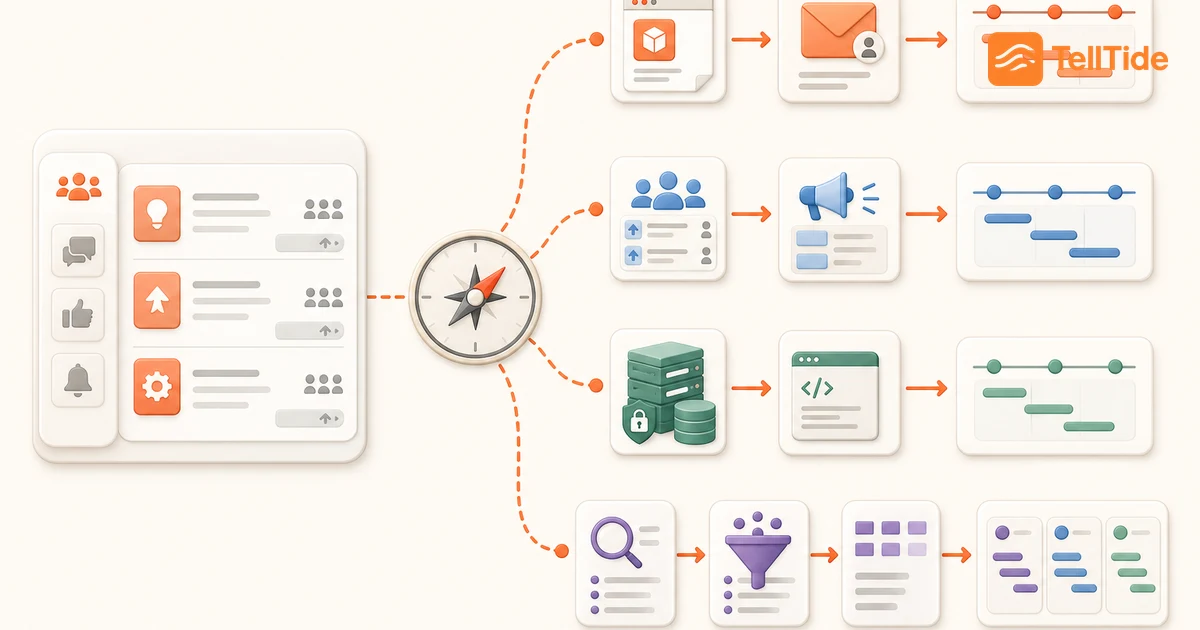
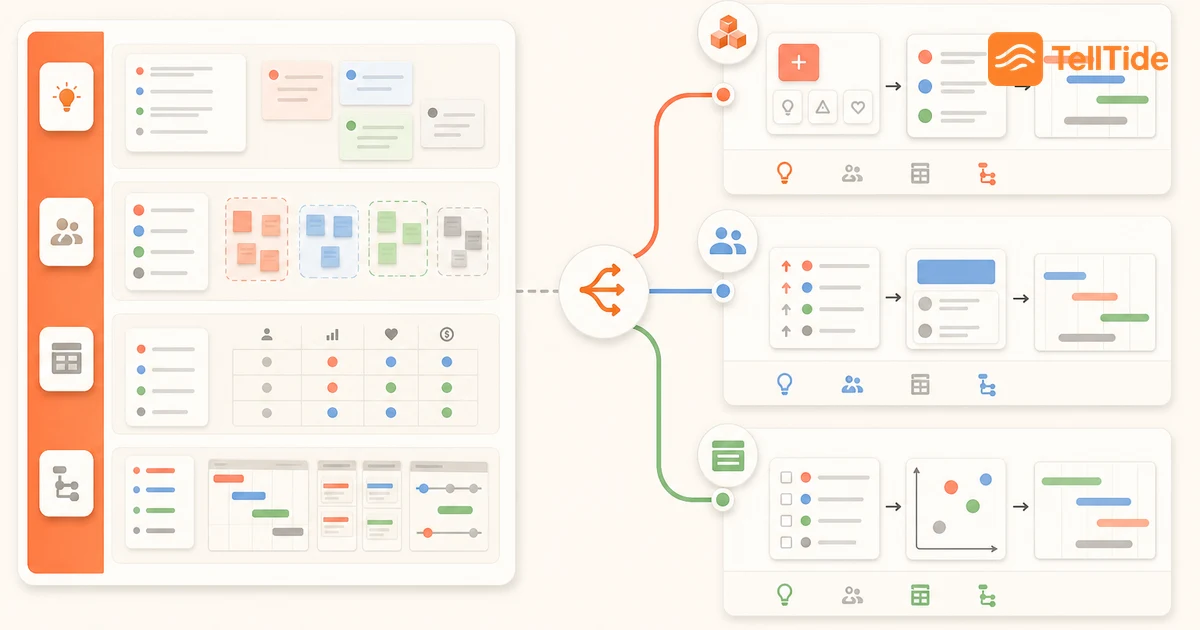
Start with the first place feedback appears. If users need a small in-app feedback widget, prioritize low-friction capture and a clean inbox. If customers already gather in a community, prioritize a feedback portal with search, voting, and duplicate handling. If feedback arrives through research calls, support, sales, and customer success, prioritize consolidation and customer context.
Then decide where qualified requests go. Some teams need a public roadmap and feature voting board. Others need an internal discovery repository connected to strategic objectives. Buying both workflows when you only use one creates duplicate data and weakens adoption.
Finally, decide how you will close the loop. A status change, roadmap comment, or direct follow-up is part of feedback management—not an optional final step.
When TellTide is the cleanest choice
TellTide fits teams that want to embed a branded feedback launcher, accept structured submissions through an API, manage the results in one inbox, and publish selected requests to a roadmap users can vote and comment on.
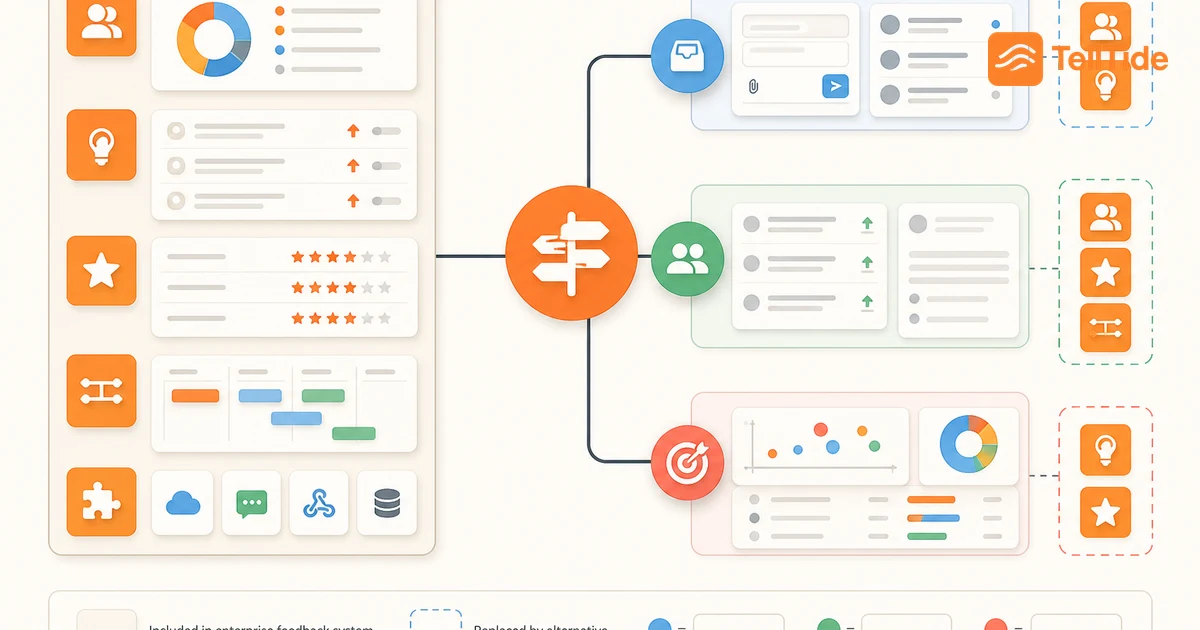
It is deliberately narrower than enterprise product management software. That is useful when the goal is to build a dependable feedback habit without introducing a second planning system. If you need advanced research synthesis, a changelog, or deep integrations today, evaluate a specialist that explicitly centers those capabilities.
Turn the shortlist into a purchasing decision
Choose one primary job and two non-negotiable requirements before scheduling trials. For example, a product team with a working help desk may need only a private bug-and-request intake. A team replacing its support stack must evaluate response handling, help content and migration as well as feedback.
Use a simple record for each candidate: workflow covered, essential capability missing, billing unit, data migration needed and ongoing owner. Do not score a feature that nobody will operate as a benefit. A broad product can reduce costs when it replaces adopted tools, but it can also create another partly maintained workspace.
TellTide publishes this comparison and is not an independent reviewer of its competitors. The descriptions are based on vendor documentation, not measured performance tests. Follow the buyer-role guide to assign the decision and rollout responsibilities.
Put this into practice: Get Pro
Questions teams ask before choosing this workflow
What is the best customer feedback tool for a SaaS startup?
A SaaS startup usually benefits from a lightweight tool with an in-app or website feedback widget, structured feedback types, a triage inbox, and a simple public roadmap. The best choice is the one the team can install quickly and review consistently.
What is the difference between customer feedback software and a survey tool?
Survey tools are optimized for questionnaires and research campaigns. Customer feedback software is usually optimized for continuous product input such as bug reports, feature requests, reviews, voting, triage, and roadmap communication.
Do feature votes tell a product team what to build?
No. Votes show demand, but teams should also consider customer segment, urgency, revenue or retention impact, strategic fit, and implementation cost.
Can TellTide collect feedback from mobile or desktop apps?
Yes. TellTide supports API submissions for products where an embeddable website widget is not the right capture method.
Research notes
Sources reviewed
These references support the discussion above. Specific pricing checks are dated in the article; its editorial update date does not imply that every linked page was reverified. Confirm plan availability with each vendor.

Abhijith
Founder of TellTide, writing practical guides about product feedback, feature requests, and public roadmap workflows for SaaS teams.