At a glance
Key takeaways
- Most teams leave Canny for one of four reasons: pricing that grows with tracked users, a public board they did not want, missing announcements, or a need to self-host.
- TellTide is a flat $19/month alternative when the job is a feedback widget, a private inbox, and a public roadmap, plus a changelog of shipped items but no announcement posts.
- Keep Canny, or pick a broader platform, if a mature public board, changelog, and integrations are central to how you work.
Why teams look for a Canny alternative
Canny is a capable product. It collects feedback on public or private boards, merges duplicates, attaches customer context, and closes the loop with a roadmap and changelog. Teams rarely leave because it does those things badly. They leave because one of these stopped fitting:
- The pricing model. Canny's paid plans scale with tracked users, meaning customers who interact with feedback. That is fair for large teams and painful for a product with many small customers.
- The public board. Some teams want feedback private first, so bug reports and half-formed ideas do not become public threads.
- The scope. A small team may only need a widget, an inbox, and a roadmap, and find the rest of the product is process they do not run.
- Hosting. Some teams must self-host customer data.
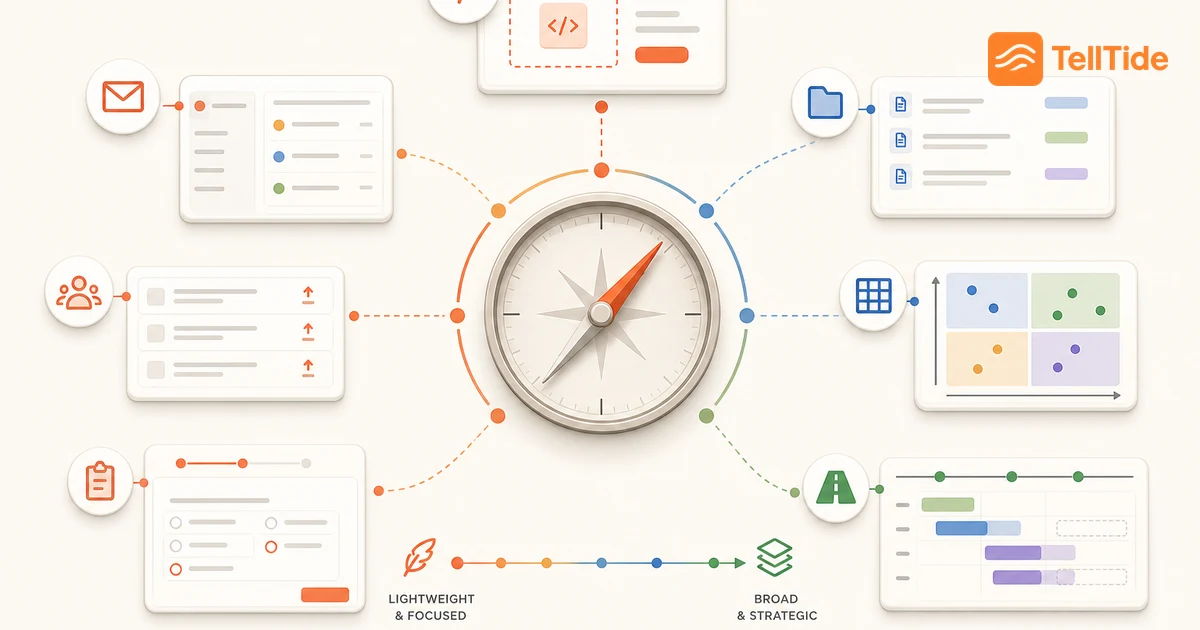
Name your reason before you read any comparison table. It decides which alternatives belong on the shortlist.
Canny alternatives at a glance
Publisher disclosure: TellTide publishes this guide. The shortlist reflects workflow fit, not independent testing. Pricing figures come from vendor pages checked on September 9, 2026; confirm current plans before you buy.
| Alternative | Best for | Pricing model | Main trade-off |
|---|---|---|---|
| TellTide | A widget, private inbox, and public roadmap for a small team | One Pro plan, $19/month flat, unlimited apps, never per user | Changelog lists shipped items only, with no announcement posts; Slack and signed webhooks, but no Jira or Linear integrations |
| Featurebase | Combining feedback with support and help content | Free plan plus paid tiers; check how seats are counted | A broader suite means more to set up and pay for |
| Frill | Ideas, roadmap, and announcements in one place | Startup $25/month with 50 ideas; Business $49/month unlimited | Idea limits and add-ons on lower tiers |
| Fider | Self-hosting an open-source voting board | Free to self-host; you run the servers | Hosting, upgrades, and backups become your job |
| UserVoice | Formal B2B feedback programs with account data | Plans aimed at larger teams; check current pricing | Heavyweight for a small team |
| Productboard | Product discovery tied to roadmaps | Priced per maker seat | A planning platform, not just feedback intake |
For reference, Canny listed a free tier with 25 tracked users and Pro from $79/month billed annually on the same date.
Free and open-source Canny alternatives
If your budget is zero, several tools have free plans or can be self-hosted. We checked these on 6 November 2026:
| Tool | Free option | Limit to know about |
|---|---|---|
| Fider | Open source: self-host, or use the free hosted plan | Hosted plan has a fair-use limit of 250 feedback requests; Pro is $25/month |
| UserJot | Free plan with 2 boards, a public roadmap, and a changelog | Private boards and a custom domain start on Starter ($29/month) |
| Sleekplan | Free Indie plan with a board and changelog | One admin |
| Supahub | Free plan | One feedback board |
| Canny itself | Free plan | 25 tracked users |
TellTide has no free plan or trial, so it belongs on this list only once you are ready to pay $19/month. Free tiers are a good way to start; check which limit you will hit first as your audience grows.
If cost is the reason: compare pricing models, not entry prices
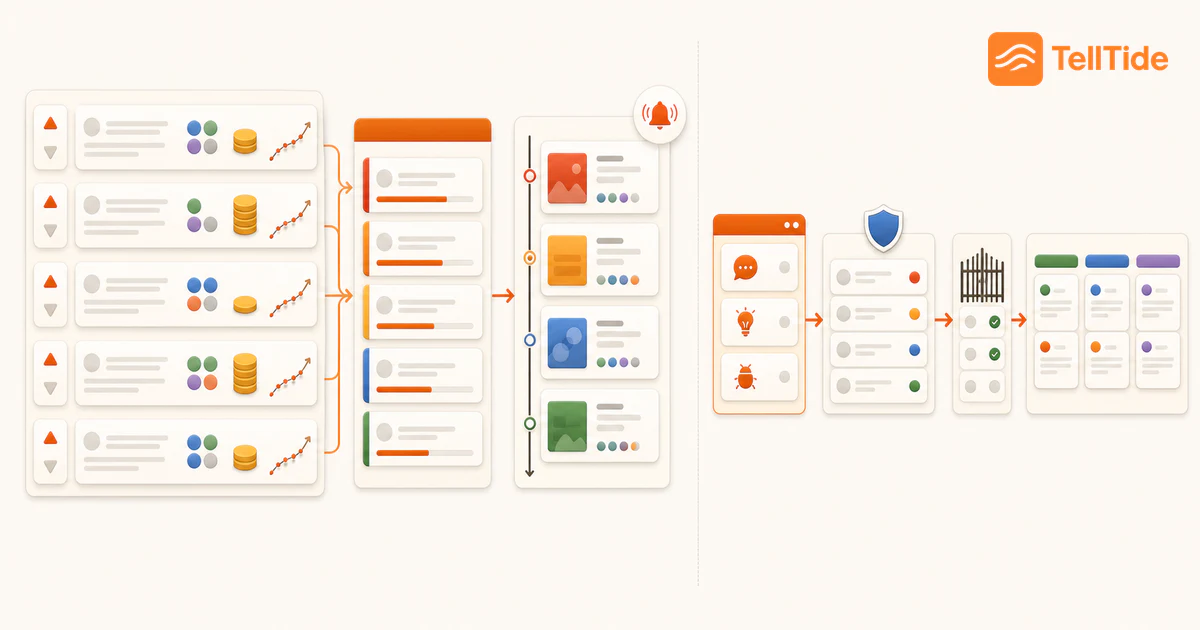
Entry prices mislead because the models differ. Work out what each tool would cost at your real usage over the next year:
- Count participants, not employees. For Canny, estimate how many customers will post, vote, or comment. Tracked users grow as your feedback program works.
- Count limits. For Frill, estimate how many ideas you will have open. For per-seat tools, count everyone who needs to triage.
- Add the add-ons. Privacy, branding removal, SSO, and integrations are often priced separately.
A flat price is easier to forecast. TellTide is $19 a month (or $194 a year) whether you have ten users or ten thousand, with every feature on one plan. It is not free, and there is no trial, so if your budget is zero, Canny's free tier or a self-hosted Fider is the honest answer.
If the public board is the problem: choose inbox-first
Board-first tools make every submission a public post. That works when your users are a community. It works less well when submissions include bug reports with account details, angry reviews, or ideas you will never build.
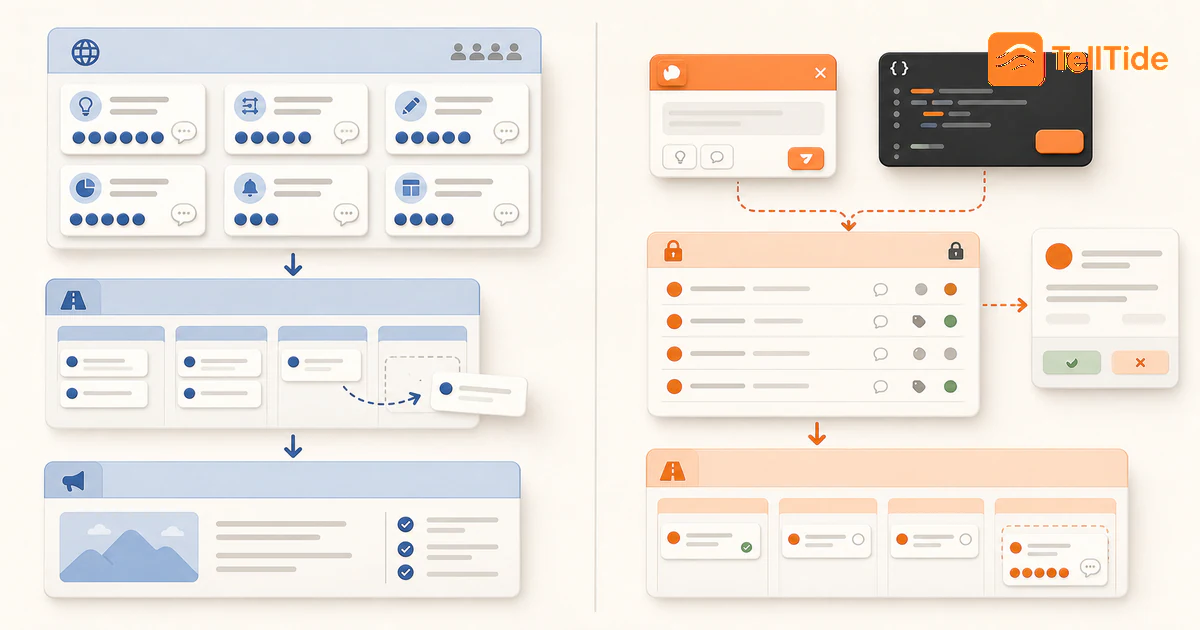
TellTide works the other way round. A widget or API collects four types of feedback (reviews, bugs, feature requests, and general feedback) into a private inbox. You triage there, then publish selected feature requests to a public roadmap where users vote and comment. Submitters get an email when their request changes status or gets a reply, so the loop closes without a public thread. See Canny vs TellTide for the detailed comparison.
If you need announcements or self-hosting
If release announcements are central, look at Frill: ideas and announcements live side by side, and the Business plan removes the idea limit. TellTide covers "it shipped" with a changelog of delivered roadmap items, each with an optional release note, plus status emails to the people who asked, but it has no announcement posts or in-app "What's new" widget.
If you must self-host, Fider is the established open-source option. Budget for the operational work: hosting, email delivery, upgrades, and backups.
If you are consolidating support and feedback, Featurebase belongs on the list. If product discovery and planning are the real job, compare Productboard and UserVoice, and read the Productboard alternatives guide for the trade-offs.
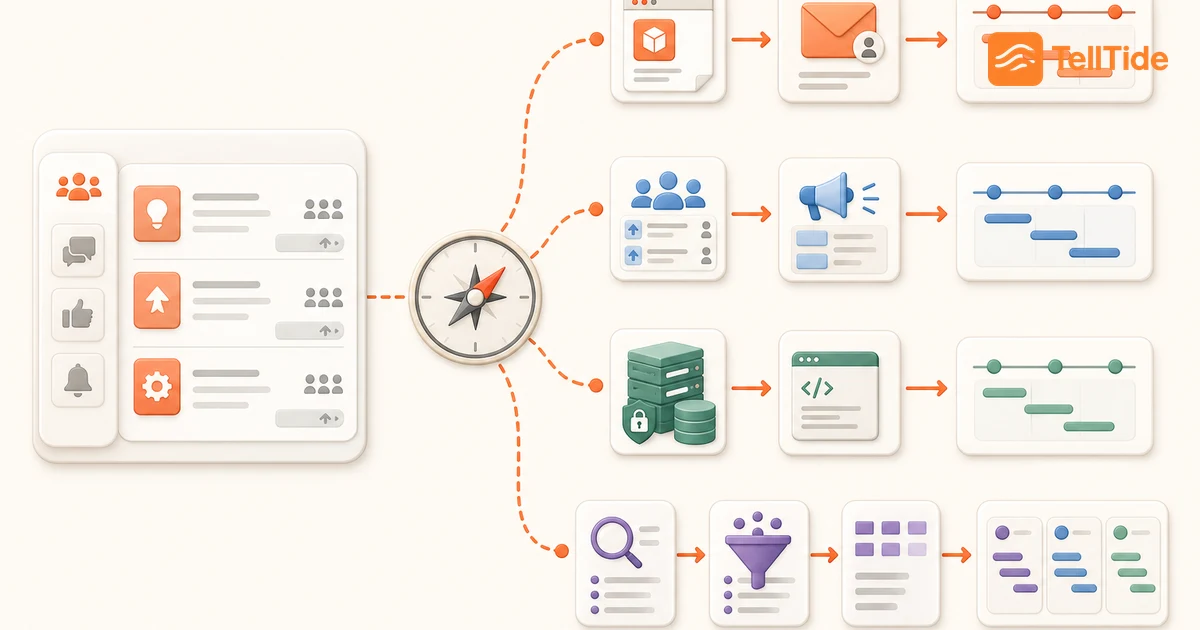
Five questions to answer before switching
Answer these with whoever triages feedback and talks to users:
- Where do users submit today: a public board, an in-product widget, support conversations, or an API?
- Do you need a changelog, or are roadmap statuses and status emails enough?
- Must users sign in, inherit identity from your app, or submit anonymously?
- Is voting enough, or do you need revenue and segment data to prioritize? If voting plus a simple score is enough, the RICE calculator covers it.
- Can you export posts, voters, comments, statuses, and users in a format you can use?
Drop a candidate the moment it fails a must-have. Two tools tested properly beat six skimmed.
A clean Canny migration plan
- Export everything first, then sort posts into active, shipped, declined, duplicate, and stale.
- Migrate only what still matters. Active and planned requests move; shipped and declined items stay in the archive.
- Install the new intake (the widget snippet or API call) and test one submission end to end.
- Redirect old links to your new roadmap and tell users where to send feedback now.
- Run both for two weeks if your plan allows it, with the old board read-only.
A migration succeeds when users can find the new feedback button and your team has a weekly triage habit, not when every historical comment has been copied.
Switching to a flat price? Get TellTide Pro for $19/month, add one script tag, and run it next to Canny until you are sure.
Questions teams ask before choosing this workflow
What is the best Canny alternative for a small SaaS team?
For a small team the deciding factors are price model, install time, and how much process the tool asks of you. TellTide suits teams that want a widget, a private inbox, and a roadmap for a flat $19 a month. Frill suits teams that want ideas and announcements together, and Fider suits teams that want to self-host.
Is there a cheaper alternative to Canny?
It depends on your usage. Canny's free tier covers 25 tracked users, and Pro started at $79/month billed annually when we checked on September 9, 2026. Flat-priced tools such as TellTide ($19/month) or Frill's Startup plan ($25/month) cost less once many customers participate, while a tiny pilot may fit Canny's free tier.
Is TellTide a Canny competitor?
They overlap on feedback capture, feature requests, voting, and public roadmaps. TellTide starts private: submissions land in an inbox and you choose what to publish. Canny starts with the board and adds a changelog and integrations around it.
What data should I export before leaving Canny?
Export posts, voters, comments, users, status history, tags, boards, and any changelog entries you may need. Keep the export even if you only migrate active requests.
Research notes
Sources reviewed
These references support the discussion above. Specific pricing checks are dated in the article; its editorial update date does not imply that every linked page was reverified. Confirm plan availability with each vendor.

Abhijith
Founder of TellTide, writing practical guides about product feedback, feature requests, and public roadmap workflows for SaaS teams.