At a glance
Key takeaways
- Publish a small set of meaningful items instead of exposing the entire backlog.
- Use status language that describes the team’s current commitment honestly.
- Update or decline old items so the roadmap remains useful.
Decide what the public roadmap is for
A public roadmap can gather demand, reduce repeated support questions, explain product direction, and show customers that feedback reaches real decisions. Choose the primary purpose before deciding what to publish.
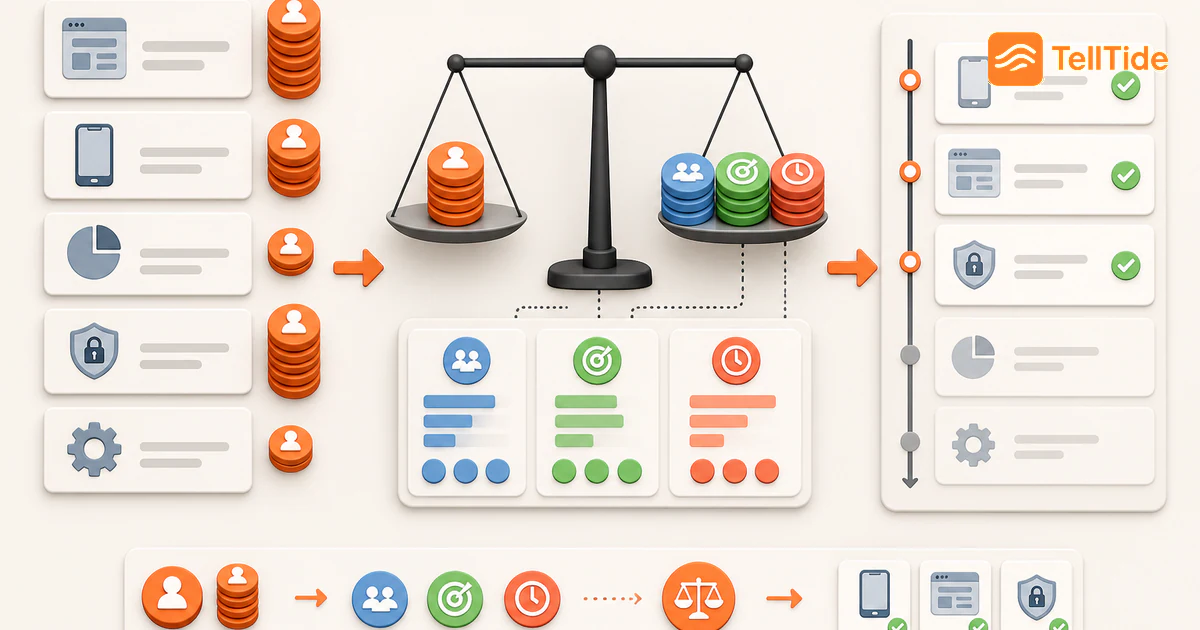
It should not be a copy of your engineering backlog. Internal work contains technical tasks, experiments, and sensitive context that do not help customers understand where the product is going.
How to create a public product roadmap
- Review private feedback and choose clear customer problems worth discussing publicly.
- Write short titles and descriptions around outcomes rather than implementation details.
- Choose a few statuses such as Received, Planned, In Progress, Shipped, and Declined.
- Enable votes and comments when they will help validate demand and use cases.
- Link the roadmap from your product and support documentation.
- Review it on a schedule and explain significant status changes.
Use roadmap statuses customers can believe
Received means the team has acknowledged the request. Planned should mean there is genuine intent, not simply that the idea sounds good. In Progress should reflect active work. Shipped means customers can use it. Declined is a valid, respectful answer when paired with a brief explanation.
Avoid “soon” unless you can define it. Dates create strong expectations, so publish them only when the team is comfortable communicating changes.
How to build a public roadmap with TellTide
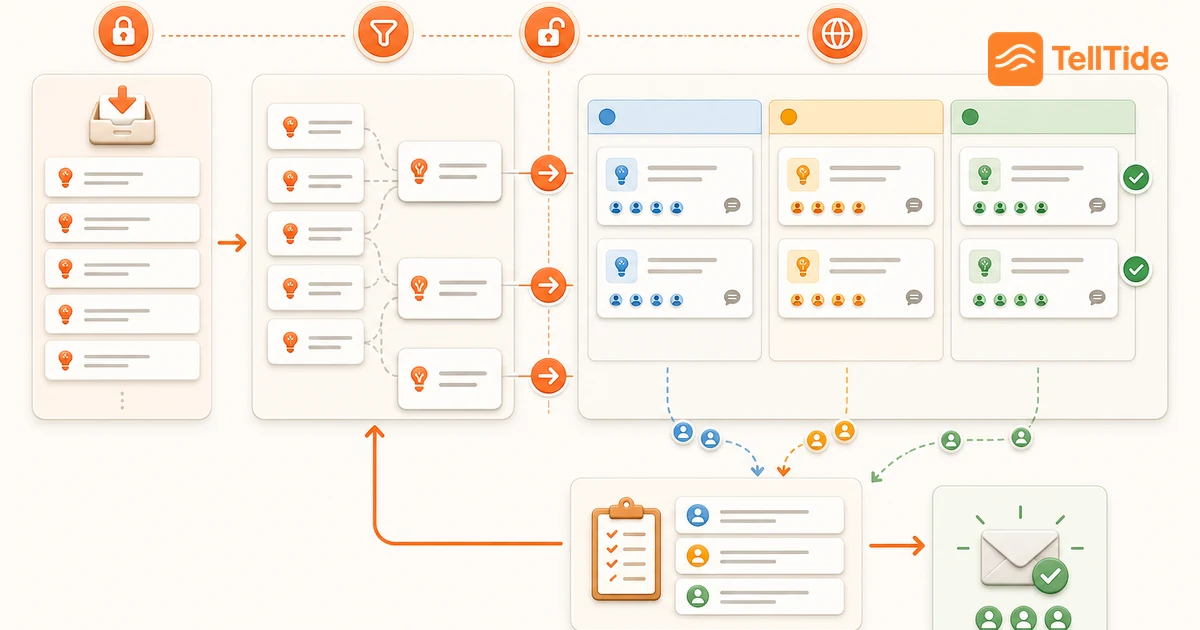
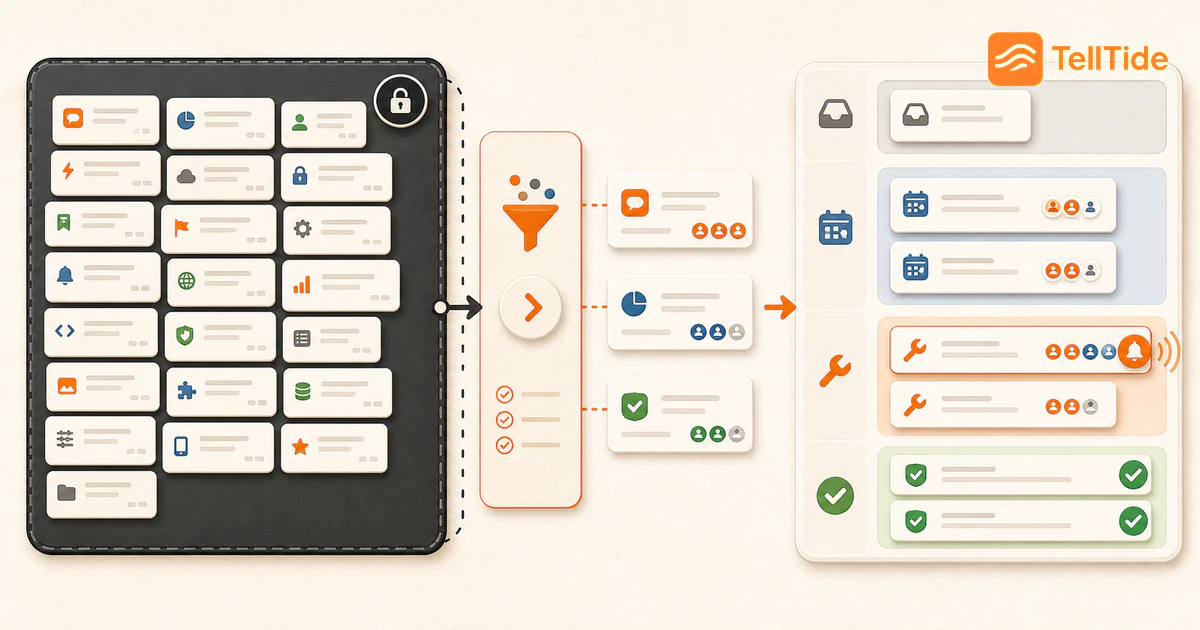
TellTide lets your team collect requests privately, review them in the inbox, and choose which ones appear on the roadmap. This protects customer details and keeps unclear or duplicate submissions out of the public view.
Configure the roadmap for your app, publish selected items, arrange them by status, and share the public URL. Customers can vote and comment while your team remains responsible for priority and status.
Example roadmap language customers can understand
Internal backlog titles often describe implementation: “Refactor export worker” means little to a customer. A public item should describe the outcome, such as “Make large exports complete reliably in the background.” The description can explain who experiences the problem, what improvement the team is exploring, and what is intentionally outside the current scope.
Use a small status set tied to observable commitments. “Received” means the request is open for evidence, “Evaluating” means the team is investigating, “Scheduled” means it has been accepted into a delivery window, “Building” means implementation is active, and “Delivered” means customers can use it. If priorities change, update the item openly instead of leaving an inaccurate promise online.
Pre-publish review
- Remove customer names, account details, screenshots, and confidential context.
- Merge duplicates and retain links to the original private submissions.
- Replace solution-heavy language with the customer problem and intended outcome.
- Choose a status the team can defend today.
- Name an internal owner and next review date.
- Decide how voters and original reporters will hear about future changes.
A public roadmap should be smaller than the internal backlog. Its value is clarity and trust, not exhaustive disclosure.
Write a roadmap item without implying a delivery promise
Use this illustrative item structure: “Problem: people repeat the same export settings each week. Outcome under consideration: reuse a saved configuration. Current state: gathering examples. Not included: scheduled delivery or new file formats.” This makes the proposed scope understandable without inventing a commitment.
Publish a delivery date only when the team has approved it and someone owns updates if that date changes. If a planned item is paused, explain the change at the same URL so followers can still find the decision.
The status labels in this article are editorial examples. Map them to the actual options available in your product rather than assuming the tool supports custom stages. For the decision behind an item, use the request-management guide.
Put this into practice: Get Pro
Questions teams ask before choosing this workflow
What should be included in a public product roadmap?
Include selected customer-facing problems or improvements, clear descriptions, honest statuses, and a way for users to vote, comment, or follow progress when appropriate.
Should a public roadmap include release dates?
Only include dates when the team is prepared to manage the expectation and communicate changes. Status-based roadmaps are often safer for early-stage SaaS products.
Can TellTide keep some feature requests private?
Yes. Feedback stays in the private inbox unless your team chooses to show a suitable item on the public roadmap.

Abhijith
Founder of TellTide, writing practical guides about product feedback, feature requests, and public roadmap workflows for SaaS teams.